 +0086-157 7552 3339
  info@leawod.com

Selecting the appropriate glass configuration for doors and windows primarily depends on matching the usage scenario, functional requirements (sound insulation / thermal insulation / safety / privacy), and energy efficiency standards.
Different glass configurations vary significantly in performance and cost. Below is a selection guide, covering common types, suitable scenarios, and key considerations:
● Identify Core Needs First: Key Dimensions for Deciding Glass Configuration
1. Energy Efficiency Needs: Focus on thermal insulation in cold regions and heat insulation in hot regions.
2. Sound Insulation Needs: High sound insulation configurations are necessary for houses facing streets, near main roads, or close to airports.
3. Safety Needs: Prioritize glass that prevents falling, resists impact, and minimizes spontaneous breakage for high-rise residential buildings, floor-to-ceiling windows, and children’s rooms.
4. Privacy Needs: Areas such as bathrooms and toilets require glass that balances light transmission with privacy.
5. Budget Needs: The price is difference between various glass configurations , so it’s essential to balance performance with cost.
● Types and Configuration Solutions for Common Door& Window Glass
|
Glass Type |
Core Structure |
Core Performance |
Scenarios |
Note |
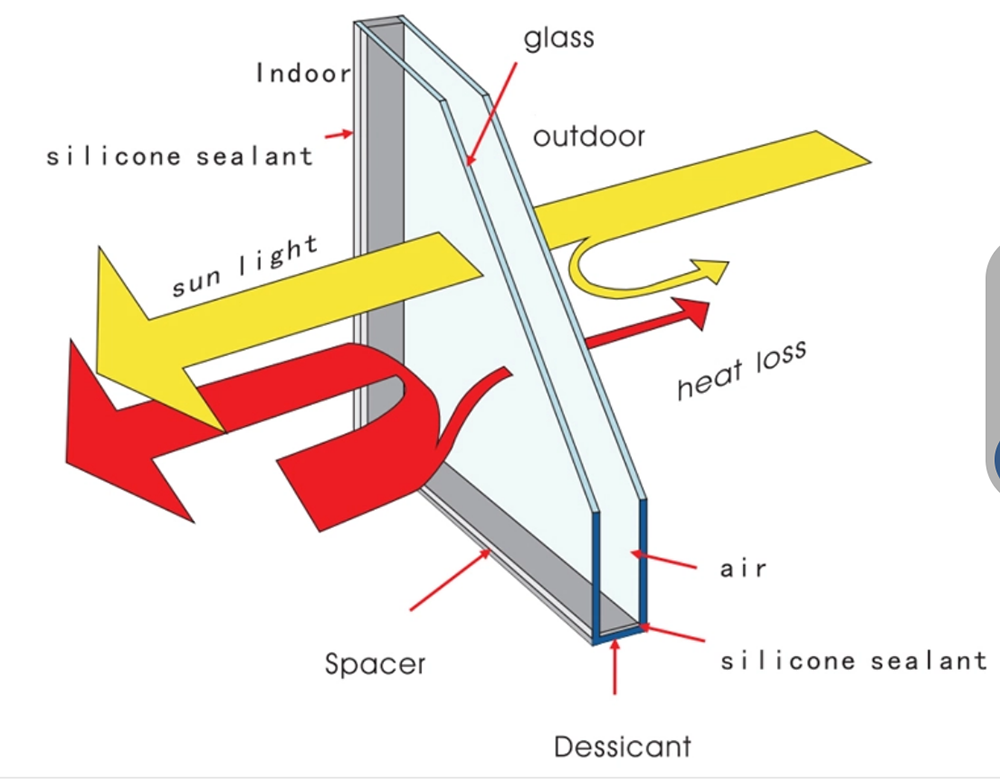
| Insulated Glass | 6mm+20A+6mm | Heat Insulating/Soundproof/The thicker the air gap (A), the better the performance. | Residential Building/Bedroom/Livingroom/Basic Energy Efficiency | It can also be upgraded to triple-glazing with two cavities, for example: 6mm + 12A + 6mm + 12A + 6mm |
 |
||||
|
Glass Type |
Core Structure |
Core Performance |
Scenarios |
Note |
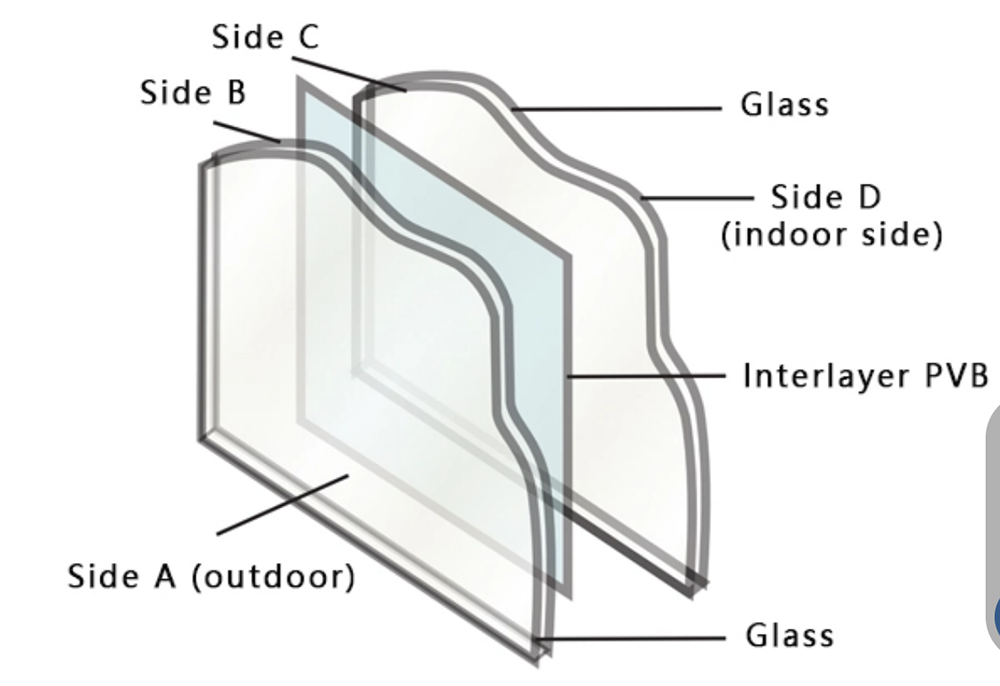
| Laminated Glass | 8mm+1.14PVB+8mm | 1.Safety&Anti-Shatter.When broken, glass fragments remain bonded to the inter layer film and do not fall off. 2.Sound insulation performance is superior to that of insulating glass. |
Floor-to-ceiling Windows/Sunroom Roofs/Glass Railings | The impact resistance and weather resistance of SGP film are better than PVB film. |
 |
||||
|
Glass Type |
Core Structure |
Core Performance |
Scenarios |
Note |
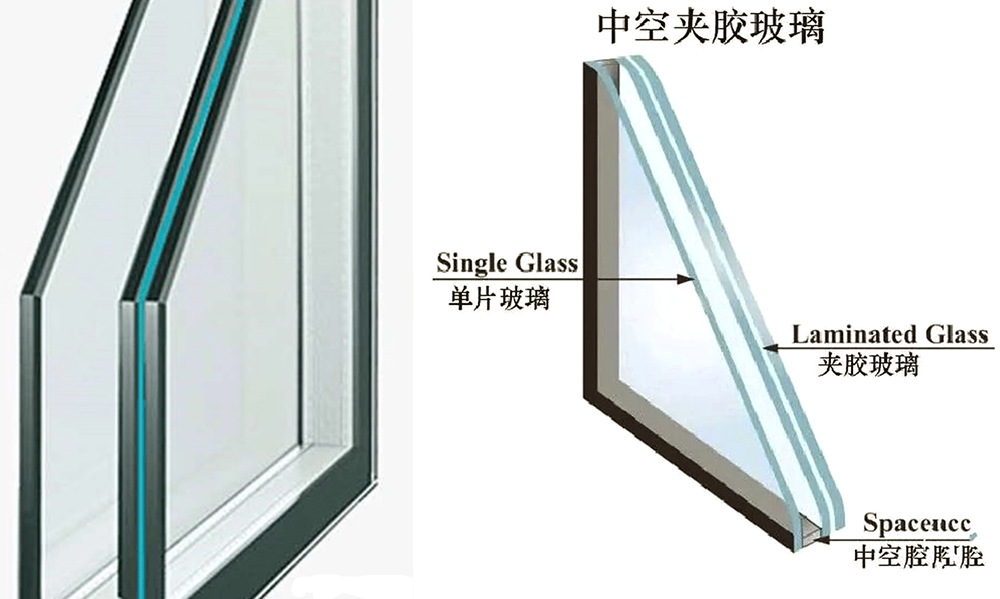
| Insulated Laminated Glass | 6mm+1.14PVB+6mm +20A+6mm | 1.It integrates safety, soundproof,and thermal insulation, offering good performance in both soundproof and heat insulation. | Floor-to-ceiling Windows/Sunroom Roofs/Glass Railings | It suitable for high requirements for sound and thermal insulation, as well as sufficient budget. |
 |
||||
|
Glass Type |
Core Structure |
Core Performance |
Scenarios |
Note |
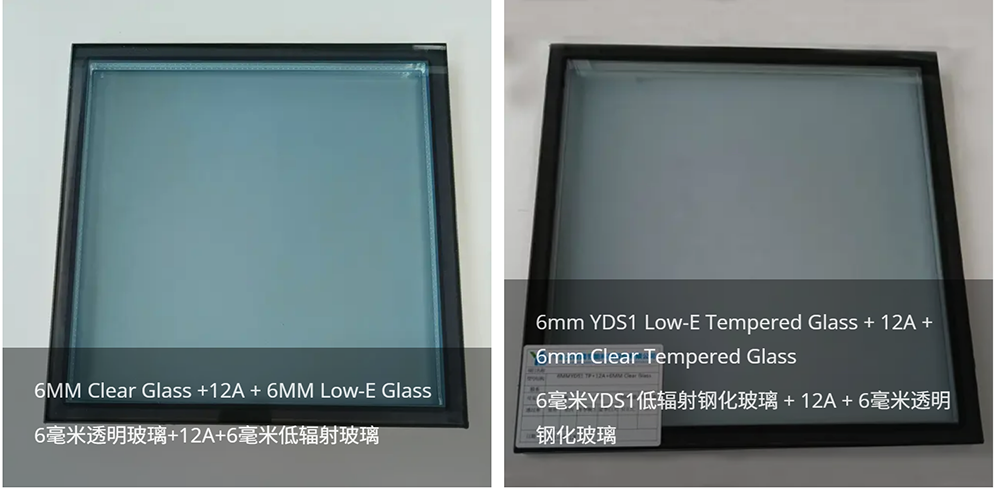
| Low-e Glass | One of the panes in the insulating glass is coated with a LOW-E film. | Low radiation, blocks infrared rays (insulation/heat resistance), good light transmission. | Energy-efficient houses in the north (high-transmission Low-e) and south (medium/low-transmission Low-e). | The coating should face the interior of the insulating cavity to avoid oxidation. |
 |
||||
● Configuration Recommendations by Scenario
1.Preferred for Homes in Cold Northern Regions:
High-Transmission LOW-E Insulated Tempered Glass (Cavity ≥ 12mm)
High-transmission LOW-E coating maximizes visible light transmission while blocking indoor heat radiation outward, enhancing insulation. For high-rise buildings, the outer pane can be upgraded to laminated glass, forming LOW-E insulated laminated glass.
2. Preferred for Homes in Hot Southern Regions:
Medium/Low-Transmission LOW-E Insulated Tempered Glass
Low-transmission LOW-E coating effectively blocks outdoor solar heat radiation from entering indoors, reducing air conditioning energy consumption. For homes facing streets, upgrade to insulated laminated glass for enhanced sound insulation.
3. Preferred for Homes with Noise Sources:
Triple Insulated Laminated Glass > Double Insulated Laminated Glass > Insulated Glass
Key technique: Use "unequal thickness design" for glass panes (e.g., 5mm+12A+8mm) to disrupt sound wave resonance and improve noise reduction. Filling the cavity with argon gas further optimizes sound and thermal insulation.
4. Preferred for Floor-to-Ceiling Windows/Sunrooms:
Safety is the top priority. Option for laminated glass or insulated laminated glass.
For sunroom roofs, tempered laminated glass (resistant to hail impact) is recommended over standard insulated glass, which may shatter and fall.
● Additional Considerations
1. Glass Thickness:
Common thicknesses for exterior windows are 5mm and 6mm. For high-rise buildings, 6mm or thicker glass is recommended to improve wind pressure resistance. For oversized dimensions, glass thickness should be increased based on the specific area.
2. Consultation:
While the above covers common residential door and window glass configurations, for more professional advice tailored to your needs, please contact our sales team for customized solutions.
Post time: Mar-04-2026


